Osteoarthritis of the knee is a common, chronic degenerative joint condition that can cause significant pain, stiffness, and restricted mobility. A common misconception is that exercising wears out the joint further. In reality, evidence-led, progressive strength training is the most powerful non-surgical defense against arthritis symptoms, directly supporting the joint and easing pain.
Understanding Knee Osteoarthritis and Wear
Osteoarthritis is characterized by the gradual thinning and wearing down of the protective cartilage that caps the ends of bones inside a joint. When this cushioning cartilage degrades, the joint lacks lubrication, leading to friction, inflammation, bone-on-bone contact, and pain. While wear and tear cannot be reversed, strengthening the surrounding muscular support structure can redistribute joint loads and significantly relieve friction symptoms.
The Role of Strength Training: Building a Natural Knee Brace
The muscles around your knee joint—specifically the quadriceps on the front of the thigh and the hamstrings on the back—act as your knee's natural shock absorbers. When these muscles are strong and balanced, they absorb joint impact during walking, standing, and climbing stairs, directly shielding the joint capsule from excessive stress.
Focusing on Quadriceps Conditioning
Research confirms that building quadriceps strength is one of the most effective ways to manage knee arthritis pain. Physiotherapists guide patients through progressive, low-impact quadriceps exercises (such as straight leg raises, terminal knee extensions, and wall sits) that build muscle without overloading the joint.
Low-Impact Resistance Progressions
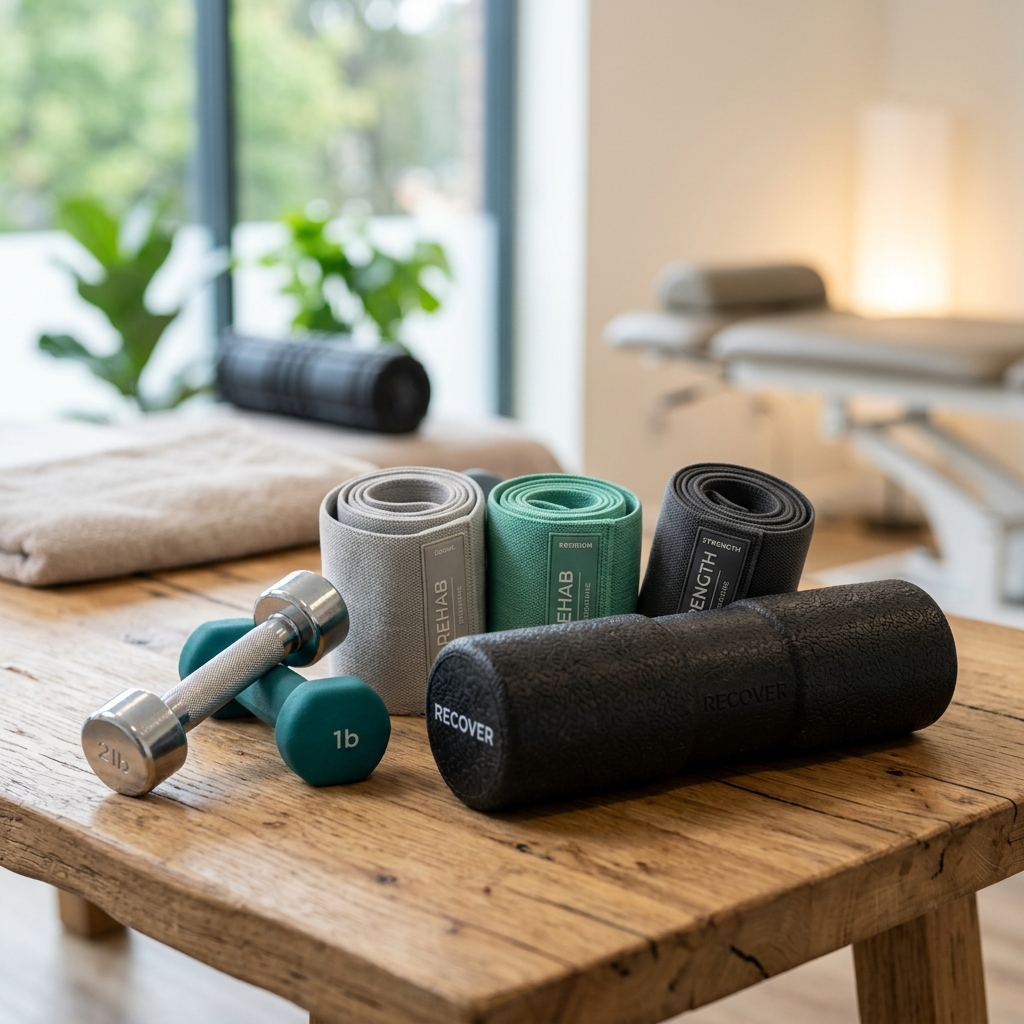
Using clinical resistance bands and light ankle weights, we gradually increase the load on the muscles. This progressive overload stimulates muscle fibers to adapt and grow stronger, without exposing the cartilage to high-impact stress (such as running or jumping).

Managing Flexibility and Joint Stiffness
In addition to strengthening, maintaining joint flexibility is essential. Arthritis naturally causes morning stiffness and restricted range of motion. We incorporate gentle, guided stretches for the calf, hamstring, and hip muscles, and practice functional movement patterns to keep the joint capsule pliable and mobile.
Ready to Rebuild Your Joint Support and Mobility?
Arrange a comprehensive home osteoarthritis assessment and custom exercise plan with our senior specialists.
Empowering Long-Term Joint Health at Home
Managing arthritis is a long-term journey. By practicing your customized exercises directly in your home, you build the habits and physical strength needed to protect your knees, maintain active mobility, and continue enjoying daily tasks without pain.