Falls represent one of the most significant and common health risks facing elderly individuals in the UK, often acting as a catalyst for a sudden loss of independence or serious skeletal injury. Fortunately, most falls are not an inevitable consequence of aging. Implementing targeted balance training, strength conditioning, and home safety audits can dramatically reduce this risk. Conducting this rehabilitation directly inside a patient's own home provides a highly personalized, practical approach to maintaining safety and confidence.
The Impact of Falls in the Older Population
According to NHS statistics, falls are the leading cause of emergency hospital admissions for older people, particularly those aged 65 and above. A fall can cause severe injuries such as hip fractures, joint dislocations, and head trauma. Beyond the physical trauma, falls often inflict a deep psychological impact, causing a profound "fear of falling" that leads older adults to withdraw from physical activity, which unfortunately triggers further muscle degeneration and joint stiffness.
How Age Affects Our Balance and Mobility Systems
Human balance relies on a complex coordination of three primary physiological systems: the visual system, the vestibular system (inner ear balance), and proprioception (the joints' ability to sense position). As we age, these systems naturally experience a decline in sensitivity, paired with age-related muscle loss (sarcopenia) and stiffening joints. Rehalign's elderly care physiotherapy programs systematically target these systems to improve reflex response times, build stabilizing lower-limb strength, and re-educate balance control.
Designing an Effective Balance and Strength Program
An effective fall prevention program must address both muscle strength and sensory balance coordination through tailored, progressive exercises:
Targeted Lower Limb Strengthening
Strong lower-limb muscles—particularly the quadriceps, hamstrings, gluteals, and ankle stabilizers—are crucial for standing up from chairs, negotiating stairs, and catching oneself during a slip. Physiotherapists guide patients through safe, bodyweight or light resistance exercises to rebuild these key muscle groups systematically.
Proprioceptive and Balance Challenges
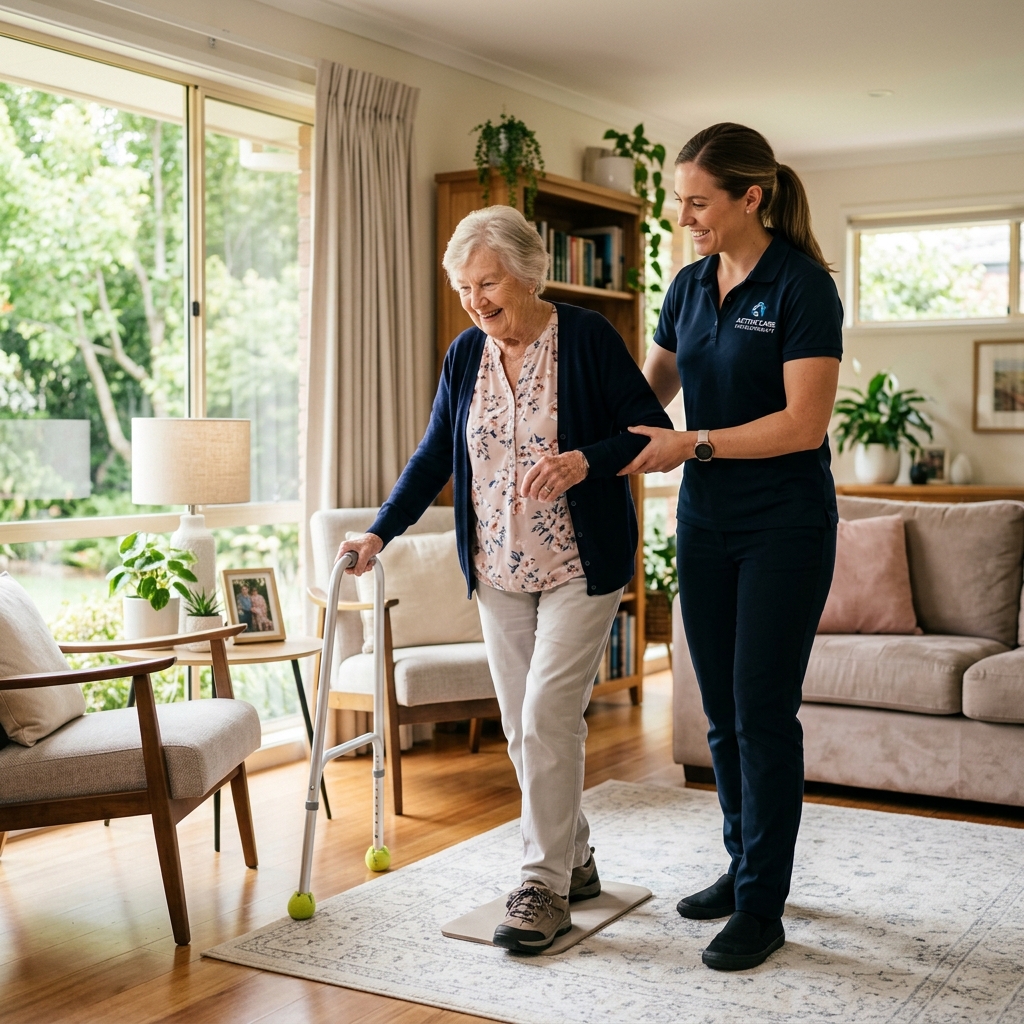
Proprioception training involves exercises that challenge the joints' sensory receptors, such as standing with a narrow stance, practicing tandem standing (heel-to-toe), or balancing on a cushioned foam pad. By progressively reducing visual support (like closing eyes during holds) or adding dynamic movement, we train the brain to rely on joint feedback, boosting stability on uneven surfaces.

Home Safety Audits: Eradicating Environmental Hazards
Rehabilitating at home allows our therapists to conduct a comprehensive home safety audit of the patient's daily environment. We identify potential trip hazards, such as loose rugs, cluttered walkways, and poorly lit hallways, and advise on immediate modifications like grab rail installations, non-slip bath mats, and improved lighting to minimize environmental risks.
Concerned About Fall Risks or Loss of Mobility?
Arrange a comprehensive home balance assessment and safety audit with our senior clinical specialists serving the West Midlands.
Regaining Independence in Daily Routines
The ultimate goal of elderly rehabilitation is to restore confidence in daily life. By directly practicing routine tasks like standing up from their favorite armchair, getting in and out of bed, and walking down their garden path, we ensure that older adults can navigate their homes safely, maintaining their dignity and independence for as long as possible.